
Tuning Down: Setting Up Your Guitar for Drop Tunings
Tuning Down: Setting Up Your Guitar for Drop Tunings is more than twisting machine heads. To make heavy riffs track tight and mix clean, you need the right strings, a measured neck relief, precise nut work, accurate intonation, and sensible pickup height for your gain structure. This guide walks you step by step from string [...]
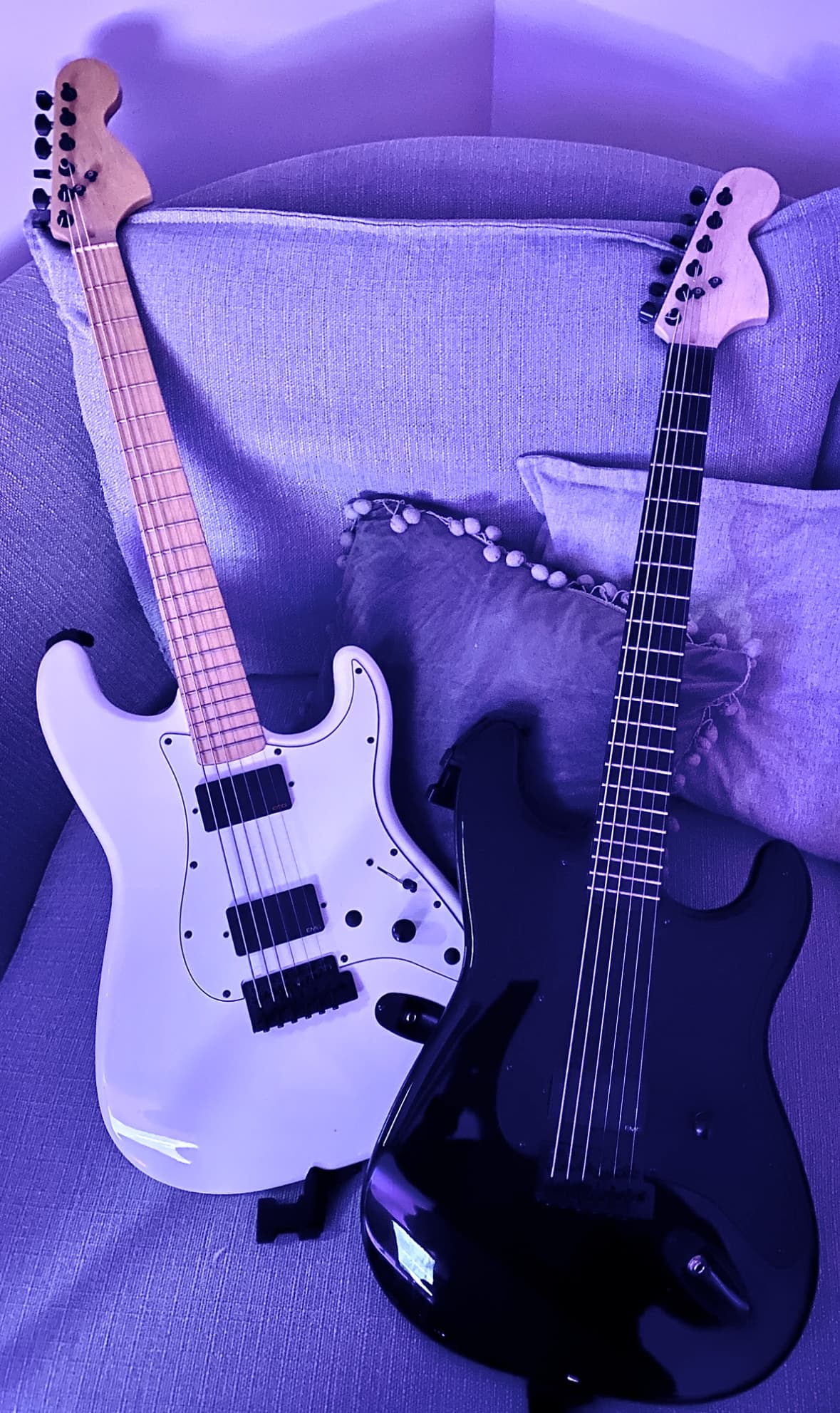
Tuning Down: Setting Up Your Guitar for Drop Tunings is more than twisting machine heads. To make heavy riffs track tight and mix clean, you need the right strings, a measured neck relief, precise nut work, accurate intonation, and sensible pickup height for your gain structure. This guide walks you step by step from string choice through full setup so your guitar stays in tune under hard palm mutes, chugs without flub, and delivers DIs that re-amp beautifully.
Why down-tuning stresses your setup
Lower pitch reduces string tension. Reduced tension changes how the string vibrates, increases excursion at the pickup, and makes pitch drift under attack more likely. The result is flubby lows, inconsistent intonation, and tuning wobble after aggressive mutes. A proper setup restores control by balancing gauge, relief, action, nut slot geometry, and pickup height to your chosen tuning and scale length.
Think in systems. Strings affect relief. Relief affects action. Action affects intonation. Intonation and tension affect how your DI hits an amp or sim. Dial the system as a whole and your riffs stop fighting you.
Pick your tuning, scale length, and gauge before touching a truss rod
Lock these choices first. You cannot complete a reliable setup if you keep changing tuning or string type. Decide the lowest tuning you need for the set list or session, choose the guitar best suited to that tuning, then select gauges that place your low string in a firm but playable tension zone.
- Scale length reality check: 25.5 inch feels about one gauge step tighter than 24.75 inch at the same pitch. Baritone lengths from 26.5 to 28.6 inch tighten further.
- Working ranges for modern heavy styles: Drop D likes 10 to 52 or 11 to 54. Drop C likes 11 to 56 up to 12 to 60 on 25.5 inch. Drop B commonly lands 12 to 60 through 13 to 64 depending on touch. For Drop A on a 6 string, many settle around a 64 to 68 low string with careful nut work.
- Hybrid logic: Keep treble strings comfortable for bends and vibrato while loading the bass side for stability. Singles let you fine tune the 2nd and 3rd strings without locking into a prepacked set.
If you want a deep dive on finding your starting gauges before you set up, read my companion guide on string selection for heavy music and consider prepping your DIs with guitar DI cleaning and tightening to maximise articulation.
The five-point setup workflow for drop tunings
Follow this order to avoid chasing your tail. Retune to pitch after every step.
- Step 1: Truss rod relief set under real tuning and gauge.
- Step 2: Bridge action to your picking force and fret condition.
- Step 3: Nut slot geometry widened and lowered for the heavier bass string.
- Step 4: Intonation at the bridge with your normal attack.
- Step 5: Pickup height for tight lows and balanced output across strings.
Down-tuned setup essentials for modern heavy guitar
This subsection rephrases the core topic to emphasise how each adjustment supports lower pitch stability. Your goal is stable pitch under hard picking, clean articulation on doubles, and DIs that re-amp consistently. The measurements below are starting points that you can adapt to your touch and fret condition.
Step 1: Set neck relief for lower tension
Lower tension strings can rattle sooner with aggressive attack if the neck is too straight. Too much relief makes higher fret positions go sharp and feel sluggish. Set a minimal but present relief that clears hard picking without choking bends.
- Rule of thumb: 0.10 to 0.20 mm gap at the 7th to 8th fret while fretting the first and last fret on the low string. Aim closer to 0.10 mm for precise modern rhythm work. Vintage-style heavy bends may prefer up to 0.20 mm.
- Check both sides: Relief can vary under the treble strings. If one side buzzes first, a small compromise or fret work may be needed.
- Settle time: After a truss rod tweak, retune, then give the neck 10 to 15 minutes before rechecking.
Step 2: Dial action that survives real-world palm mutes
Action that is perfect for clean leads can fall apart under heavy rhythm attack. Down-tuned guitars benefit from a touch more clearance on the bass side to avoid fret slap when the string excursion increases at lower pitch.
- Starting heights at the 12th fret: 1.6 to 1.8 mm on the low string and 1.2 to 1.4 mm on the high string for modern metal. Raise the bass side by 0.1 to 0.2 mm if your mutes cause clatter.
- Bridge style matters: Tune-o-matic raises both sides together. Individual saddle bridges let you shape the radius to the fretboard for a consistent feel during fast riffing.
- Play-test reality: Test with your exact right-hand angle and picking force. Down-pickers typically require slightly more clearance than alternate pickers at the same gain level.
Step 3: Cut and widen nut slots for heavy bass strings
A common source of tuning instability in drop tunings is a nut slot that pinches the oversized low string. If the string binds, it will return sharp or flat after bends and mutes. The slot must match the new gauge and break angle while keeping the string seated at the very front edge of the nut.
- Width: Slot width should equal the string diameter plus a minimal clearance. If you upgrade from a 46 to a 60 on the low string, the original slot is almost certainly too narrow.
- Angle: Fall away should be toward the tuner post, with the witness point at the fingerboard side. This preserves intonation and prevents sitar noise.
- Height at first fret: With the string fretted at the third fret, a tiny gap over the first fret is ideal. If the string frets out at the first fret under this test, the slot is too low and may require a nut shim or replacement.
If you are preparing a studio session and want to ensure your DIs are rock solid after these changes, I can sanity check the files and tidy transients through DI cleaning and tightening before re-amping, or we can jump straight to re-amping to audition heads, cabs, and IR chains.
Step 4: Intonate under your real picking force
Intonation set with feather-light plucks will go sharp when you track at full intensity. Always intonate using the right-hand force you use on the record. Tune open, check the fretted 12th, and adjust the saddle so fretted pitch equals open pitch at the octave. Repeat on the low two strings after a block of down-picked mutes to simulate session conditions.
- Repeat for each string: Heavier bass side requires special attention. If the fretted note is sharp, lengthen the string by moving the saddle back. If it is flat, shorten it by moving the saddle forward.
- Check chords high on the neck: Play power chords at the 7th through 12th frets. If they beat or smear, refine the low two saddles.
- Recheck after string age changes: Old strings intonate poorly. Set intonation with fresh strings and replace them consistently during long sessions.
Step 5: Set pickup height for tight, controlled low end
Lower tension strings swing wider. If pickups sit too close, magnetic pull can cause warble and wolf tones, and the extra excursion can overload the front end of your gain chain. Backing the bass side off a turn or two often tightens the sound dramatically in down tunings.
- Starting point for high-output humbuckers: With the string fretted at the last fret, leave roughly 2.5 to 3.0 mm on the bass side and 2.0 mm on the treble side. Back off further if the low end feels blurry.
- Balance by ear: Match perceived loudness between low and high strings. Aim for attack clarity not just output.
- Noise gates and front-end gain: A gate will not fix mush caused by too little tension and too much pickup height. Solve it at the source first.
Bridge specifics: tremolo vs fixed in lower tunings
Floating tremolos require spring tension to match string tension. When you tune down and increase gauge, the bridge angle will shift unless you re-balance the claw. Fixed bridges are simpler but still need saddle travel for intonation. Plan your hardware choice around the lowest tuning you intend to use.
- Floating units: Add spring tension when you increase gauge or drop pitch so the baseplate returns to level. Re-intonate after you find level, then recheck relief due to the altered pull on the neck.
- Hardtail bridges: Ensure there is enough saddle travel to intonate a 60 to 68 low string. Some bridges run out of room for extreme drops without flipping saddles or changing string-through paths.
Baritone and extended range considerations
Longer scales restore tension in low tunings and often reduce intonation headaches. A 26.5 inch or 27 inch baritone can run a lighter gauge than a 25.5 inch in the same tuning and still feel firm. Seven and eight string guitars benefit similarly, though pickup voicing and low-string pole piece alignment become more critical.
- 26.5 to 27 inch 7 string in Drop A: Try 10 to 58 or 10 to 60, adjusting the low to 62 if you pick very hard.
- 27 to 28 inch 8 string in F sharp standard: 10 to 74 is a common starting point. For Drop E, push the bottom to 80 or 82.
- Nut work still matters: Even with baritone scales, oversized lows demand precise slot width and angle to keep tuning stable.
Fret condition, leveling, and how attack style changes the target
Small high spots show up sooner with low tension and hard attack. If you cannot get rid of a persistent rattle in one position without raising action everywhere, you may need a level and crown. Players who down-pick with a steep angle often benefit from slightly heavier lows and a touch more action. Alternate pickers may run lower action at the same tuning without issues.
Electronics and gain staging for down-tuned clarity
Setup controls the physical string. Electronics determine how the DI translates into your rig. For aggressive low tunings, keep the signal path consistent and avoid clipping the input. High output pickups can mask pitch wobble but also exaggerate low-end bloom if you set them too close. Low output pickups reveal more transient detail and can sound tighter at the same gain, as long as the setup supports them.
- DI headroom: Peaks should sit with comfortable margin below clipping. If your interface has pad options, use them when needed rather than lowering pickup height purely to avoid input clipping.
- Front-end gain discipline: Gain staging matters more in low tunings. Let the power section or virtual power stage do the heavy lifting and keep preamp gain a hair lower to preserve pick definition.
- Cab impulse choice: Tighter IRs with a modest low cut around 70 to 90 Hz and a gentle high roll-off around 8 to 10 kHz help spotlight articulation from a good setup.
Studio checklist for drop-tuned rhythm tracking
- Fresh strings for every serious tracking block. Swap the low string after 6 to 8 hours in long sessions.
- Document tuning, scale length, gauge, and whether the third string is wound.
- Test two pickup height positions and choose the tighter one on playback rather than the louder one.
- Record short DI tests of hard mutes and open chords to confirm stability before committing to full takes.
- Plan re-amping paths in advance. If you want to audition multiple heads and cabs, add a pass through re-amping to keep the performance identical while you compare tones.
Practical measurement cheat sheet
- Neck relief: 0.10 to 0.20 mm at the 7th to 8th fret measured on the low string while fretting first and last.
- Action at 12th: 1.6 to 1.8 mm low string, 1.2 to 1.4 mm high string. Adjust by 0.1 to 0.2 mm based on pick attack.
- Pickup height: With last fret fretted, 2.5 to 3.0 mm bass side, 2.0 mm treble side for hot humbuckers. Increase clearance if lows blur.
- Low string in Drop C on 25.5 inch: Often .056 to .060. In Drop B, .060 to .064. In Drop A on a 6 string, .064 to .068 with correct nut work.
External resources to understand the physics behind the feel
If you like reading on the why, these primers are helpful: string gauge basics, scale length and tension, and guitar tuning systems. Manufacturer tension charts are also useful for building custom sets, such as the popular charts from string brands you already use.
Who benefits most from a down-tuned specific setup
Any heavy band that needs reliable doubles at speed. Metalcore, deathcore, modern prog, and djent all push low strings hard while demanding tight timing. If that describes your world, you need a setup tailored to your lowest tuning.
- Touring players: Coated sets for longevity and a touch more action to survive changing humidity.
- Studio artists: Fresh uncoated strings and slightly lower pickup height for transient clarity on DIs.
- Bedroom producers: Hybrid sets that keep leads comfortable on top while staying tight on the low string through amp sims.
Troubleshooting common issues in drop tunings
- Open chugs sound woolly: Increase low string gauge by 2 to 4 thousandths or raise pickup bass side by half a turn to re-balance, then back it off if warble appears.
- Notes go sharp when fretted: Action too high or nut slots too tall or narrow. Lower the action and recut the nut for the new gauge.
- Tuning drifts after mutes: Nut binding. Widen and polish the slot. Confirm break angle and witness point.
- Persistent single-fret buzz: Likely a local high fret. Consider a level and crown rather than cranking action globally.
- DI clips on peaks: Reduce interface input or engage pad. Do not bury the pickup into the strings to fix clipping.
Workflow to audition two setups quickly
- Choose two low string gauges that bracket your goal, for example 56 and 60 for Drop C on 25.5 inch.
- Set relief and action once, then only change nut slot and intonation between trials.
- Record the same DI loop with identical metronome settings.
- Re-amp or run through the same amp sim. Do not change gain or EQ.
- Pick the tighter sounding take on playback rather than the louder one.
Integrate setup decisions with your production plan
Setup influences editing pace, tone shaping, and loudness strategy. A well set instrument gives you cleaner doubles, which need less corrective editing. That means fewer artefacts, better phase between sides, and less low cut aggression in the mix. If you want a second set of ears on how your down-tuned guitars will sit with bass and drums, book a short session for genre-targeted mixing for ultra-low tunings or a broader metal mixing and mastering perspective.
Related reading and services
- Tighten your DIs before re-amping with precision cleanup
- Compare multiple heads and cabs through professional re-amping
- Mixing for low tunings and percussive articulation
- Full metal mixing and mastering to seat guitars with bass and drums
FAQ: setup tips for drop tunings
Do I need a new nut for heavier drop tuning strings
Not always, but often the low string slot needs widening and lowering. If you are moving from a 46 to a 60 or more, the original slot usually pinches, which causes tuning jumps after mutes. A properly cut slot that matches gauge and break angle is vital for stability.
What relief and action work best for Drop C rhythm playing
As a starting point, try 0.10 to 0.15 mm relief and action around 1.7 mm at the low string and 1.3 mm at the high string at the 12th fret. Increase bass-side clearance slightly if your palm mutes clatter under real picking force.
How heavy should the low string be for Drop B or Drop A
On a 25.5 inch scale, many players like .060 to .064 for Drop B and .064 to .068 for Drop A. Baritone scales can run slightly lighter for the same firmness. Your attack style may nudge you a size up or down.
Why do my chords sound out of tune high up the neck after tuning down
Intonation was set with a lighter touch or for a different gauge. Re-intonate using the same picking force you use when tracking and confirm that the nut slots are cut for the new string sizes. Excess relief can also cause sharpness on fretted notes high on the neck.
Should I change pickup height when I tune down
Usually yes, by a small amount. Down-tuned strings move more air. Back the bass side off to roughly 2.5 to 3.0 mm with the last fret fretted to reduce magnetic pull and clean up the low end, then balance by ear against the treble side.
Floating tremolo keeps tilting when I drop tune. What do I do
Increase spring tension at the claw to re-level the bridge under the new string pull, then re-intonate. Any change to tension requires a full check of relief, action, and intonation in that order.
Final thoughts: set it once, track faster, sound heavier
A good down-tuned setup makes your playing feel easier and your mixes cleaner. Lock your tuning, pick a gauge that suits your hands, then move through relief, action, nut, intonation, and pickup height in order. If you want a fast route to release-ready heaviness, combine DI cleanup with re-amping and specialised mixing for low tunings so your guitars lock with bass and drums from the first playback.